
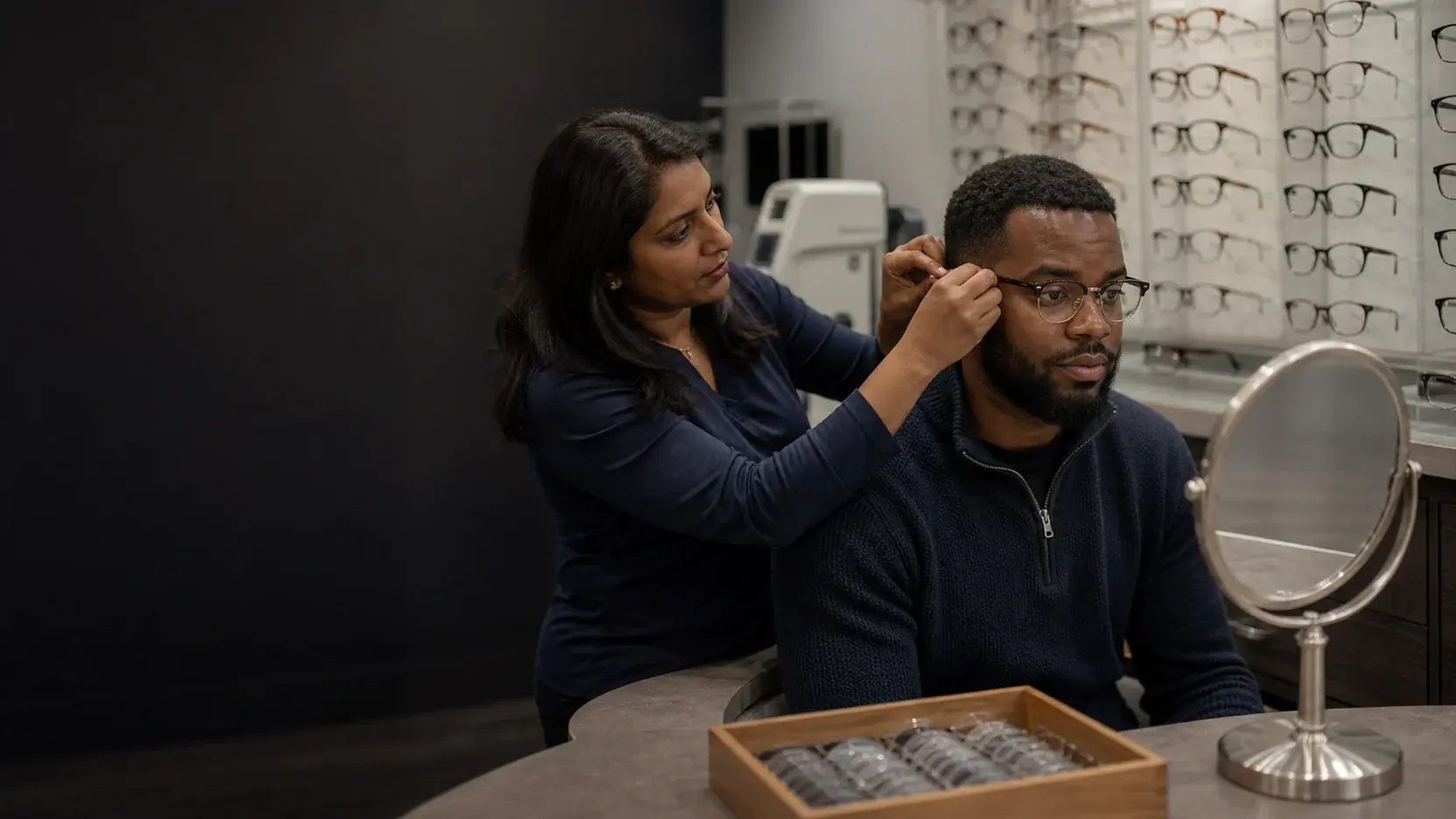
Exams & providers
We compare exam frequency, copays, and access to the provider and retail networks employees are likely to use.
We compare vision plans by provider access, exam coverage, frame and contact allowances, frequency, and employee cost.
The right policy starts with the details of how the organization works and what it needs to protect.
We compare exam frequency, copays, and access to the provider and retail networks employees are likely to use.
Allowances, lens upgrades, and replacement frequency determine how far the benefit goes at purchase time.
Plans handle contact lenses, medically necessary lenses, and discounts differently. We make the limits visible.
We compare the parts together so a lower price does not hide a larger gap.
Most problems begin with an assumption that was never checked against the policy.
A larger allowance may not be better if employees must wait longer before using it again.
Employees value plans they can use conveniently near home or work.
Progressive, anti-glare, and specialty lenses may involve added employee cost even when basic lenses are covered.
Straight answers before a decision is made.
Vision benefits usually focus on routine exams and eyewear. Medical eye conditions are generally handled through medical coverage.
Many plans provide an allowance for one or the other during a benefit period. The exact rules vary.
Often yes. We can compare employer-paid and employee-paid approaches alongside the rest of the benefits package.
Bring the current plan or policy. We will explain what it does, identify gaps, and compare the options that fit.