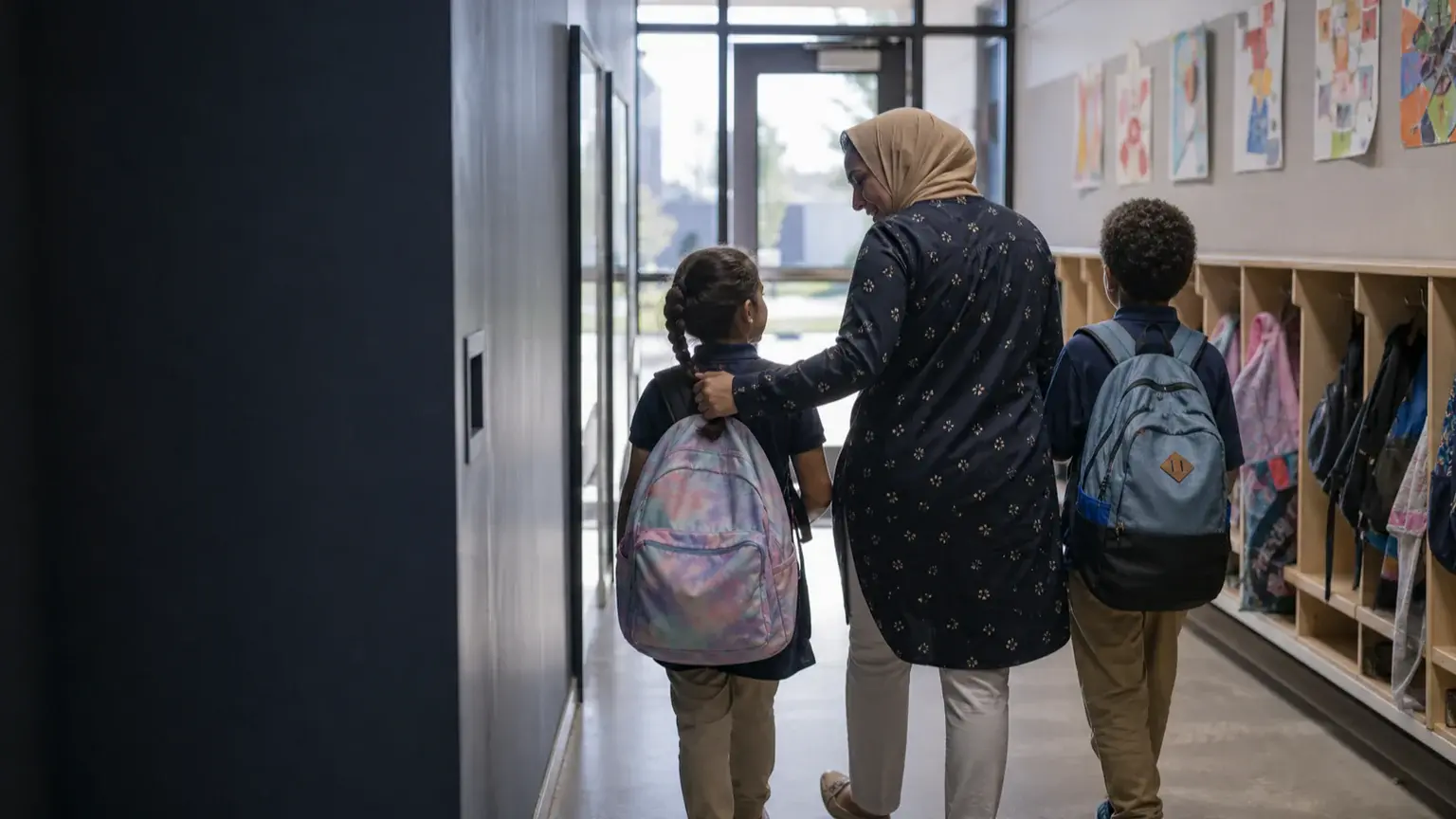
Programs for children raise their own set of questions.
Schools, camps, and youth programs add supervision, transportation, staffing, and activity risks. We make sure the congregation’s policy addresses them.
What this covers
What a school or youth program needs.
Layered on top of the congregation's property and liability program.
General & educators legal liability
Injuries on the playground, in classrooms, and during activities, plus claims arising from educational decisions — discipline, placement, accommodation, and dismissal. Educators legal liability responds to the second category, which general liability does not.
Abuse & molestation
The most serious exposure any youth program carries. Coverage should be explicit and adequately limited, not buried in a sub-limit. Carriers underwrite on practice: background screening, two-adult rules, documented training, and reporting procedures affect eligibility, price, and — far more importantly — outcomes.
Student accident
Blanket accident coverage that pays medical expenses regardless of fault. It resolves ordinary playground injuries quickly and without adversarial process, which frequently prevents a small incident from becoming a liability claim.
Transportation & field trips
Buses, vans, staff vehicles, and parent volunteers driving children. Owned vehicles need commercial auto; parent and staff drivers create hired and non-owned exposure. Off-site trips also raise questions about supervision ratios and host venue requirements.
Staff, volunteers & employment practices
Schools employ teachers, aides, and seasonal camp staff, and rely heavily on volunteers. Employment practices coverage matters, and volunteers need to fall inside the definition of insured.
Camps, overnights & special activities
Overnight programs, swimming, sports, and off-site trips each carry specific requirements. Some activities are excluded outright on standard forms and need to be disclosed and endorsed.
Typically included
What a youth program's coverage should include.
Practice and paperwork matter as much as limits here.
Abuse and molestation at a meaningful limitEducators legal liabilityStudent accident coverageHired and non-owned autoCommercial auto on owned vehiclesEmployment practices liabilityVolunteers within the definition of insuredEndorsements for aquatics, sports, and overnightsBackground screening and training documentationNot sure? Ask us
Where policies fall short
Where youth programs are exposed.
The findings that recur across schools and camps.
01
Abuse coverage at a token sub-limit
The most serious exposure carrying the smallest limit on the policy. It should be a deliberate board decision reviewed every year.
02
Parent volunteers driving children
Hired and non-owned auto exposure that most programs have and few have insured. A serious accident reaches the organization that arranged the trip.
03
Activities the carrier never approved
Swimming, trampolines, high-adventure trips, and overnight programs are commonly excluded without a specific endorsement.
04
Screening applied to staff but not volunteers
Carriers increasingly expect the same standard for anyone with unsupervised access to children. So do families.
05
No student accident coverage
Without it, an ordinary injury becomes a liability conversation with a family. With it, the medical bill is simply paid.
Common questions
What schools and youth programs ask.
Practical questions from directors and boards.
Does the congregation's policy already cover the school?
Partly, and rarely completely. Property and general liability may extend, but educators legal liability, student accident, adequate abuse limits, and transportation exposures usually need to be addressed specifically. We look at the two programs together rather than assuming one covers the other.
What screening do carriers expect?
Background checks on employees and on volunteers with unsupervised access, documented training, two-adult rules, and a written reporting procedure. These affect underwriting, and more importantly they reduce the likelihood of the event itself.
Parents drive on field trips. Is that a problem?
It is an exposure worth insuring. Their personal auto is primary, but the program that arranged the trip can be pulled into a serious claim. Hired and non-owned auto coverage is inexpensive and frequently missing.
Do we need student accident coverage if we have liability?
They do different jobs. Liability responds when the program is at fault; student accident pays medical expenses regardless of fault. The second one resolves most playground injuries quickly and keeps them from becoming the first one.
Our review
What we review for schools and youth programs.
Abuse and molestation limits and defense treatment
Educators legal liability
Student accident coverage
Owned vehicles and hired/non-owned exposure
Every activity offered, including aquatics and overnights
Background screening for staff and volunteers
Two-adult rules and training documentation
Employment practices coverage
Enrollment counts and supervision ratios
Bring the program calendar, not just the policy.
What the school actually does across a year tells us more than the declarations page does.