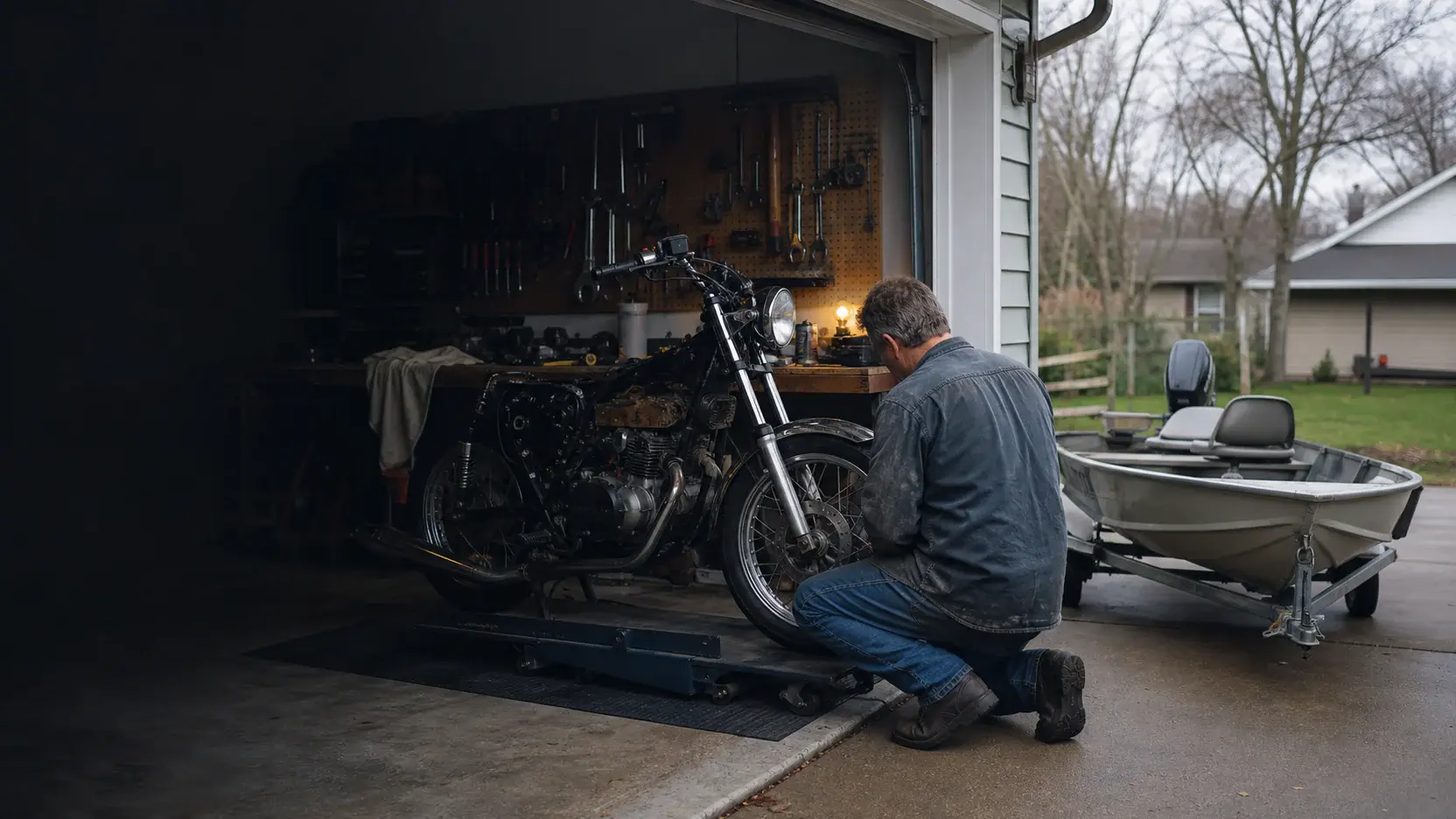
The vehicles a standard policy was not written for.
Boats, motorcycles, RVs, and classic cars need coverage built for how they are valued, stored, and used. We compare the specialty options.
What this covers
Coverage built around the vehicle, not the commute.
Each of these categories has its own conventions. Grouping them under a standard auto policy is where value gets lost.
Classic & collector cars
The central issue is valuation. A standard policy settles at actual cash value, which treats a restored vehicle as an old one. Collector policies use agreed value — a figure set at the outset and paid in full at a total loss. They typically also assume limited mileage, secure storage, and a driver profile, in exchange for pricing well below a standard policy.
Boats & watercraft
Hull coverage, liability, and the details that only matter on the water: navigation limits describing where you are covered, fuel-spill liability, wreck removal, on-water towing, trailering to and from the marina, and the lay-up period when the boat is out of the water. Uninsured boater coverage exists too and is frequently overlooked.
Motorhomes & travel trailers
An RV is a vehicle and a residence at once. Coverage should address personal belongings inside, attached accessories such as awnings and satellite equipment, emergency expense if you are stranded far from home, and vacation liability while parked and occupied. Full-time RVers need a different structure than seasonal travelers.
Motorcycles & powersports
Custom parts and accessories coverage is the line most often left at a default that will not replace what is actually on the bike. Passenger liability, safety-apparel coverage, and how the carrier treats trackdays or off-road use are all worth confirming before the season starts.
Typically included
What we look for in a specialty policy.
The specifics differ by vehicle, but these are the recurring decision points.
Agreed value on collector vehicles
Navigation limits that match where you go
Trailering and transport coverage
Custom parts and accessories at a real limit
Lay-up or seasonal rate adjustments
Uninsured boater or motorist coverage
Emergency expense and roadside for RVs
Storage-location requirements you can actually meet
Where policies fall short
Where specialty vehicles get underinsured.
The patterns we see most often on these policies.
01
A restored car on a standard auto policy
Years of restoration settled at book value for a vehicle of that age. Agreed value exists precisely to prevent this, and collector policies are often less expensive than the standard policy they replace.
02
Cruising outside the navigation limits
A boat policy may cover coastal waters to a stated distance, or a specific set of lakes and rivers. A trip beyond that line can be uncovered entirely, and it is a one-sentence fix before you go.
03
Custom parts left at the default limit
Exhaust, wheels, paint, audio, and accessories frequently exceed a default accessories limit by a wide margin. The limit needs to be set deliberately.
04
Cancelling coverage for the winter
Dropping a policy in the off-season saves little and exposes the vehicle to fire, theft, and storage losses precisely when it is unattended. A lay-up provision is the better tool.
Common questions
Specialty vehicle questions.
What owners ask before a season starts.
What is agreed value and why does it matter?
Agreed value fixes the payout at a number you and the carrier settle on when the policy is written, supported by an appraisal or documented build. At a total loss the insurer pays that figure without arguing depreciation. For anything restored, modified, or appreciating, it is the single most important term in the policy.
Does my auto policy cover a boat trailer?
The trailer itself may have limited coverage under an auto policy, but the boat on it usually does not. Trailering coverage generally belongs on the watercraft policy, and it should be confirmed before a long haul rather than after.
Can I let a friend drive my classic car or take my boat out?
Sometimes, and sometimes only if they meet the driver profile the policy was underwritten on. Collector policies in particular are priced around limited, defined use. Ask before you hand over the keys.
Do I need coverage in the off-season?
Yes. Most losses on seasonal vehicles happen in storage — fire, theft, water damage, a collapsed roof. A lay-up period reduces the premium while keeping physical damage coverage intact, which is a far better answer than cancelling.
Our review
What we review for specialty vehicles.
Valuation basis — agreed, stated, or actual cash value
Current appraisal or documented build sheet
Navigation or usage limits
Trailering, transport, and towing
Custom parts and accessories limits
Storage location and security requirements
Who is permitted to operate the vehicle
Seasonal and lay-up provisions
Tell us what is in the garage or at the dock.
Specialty markets vary widely between carriers. We will compare the ones that write your kind of vehicle.