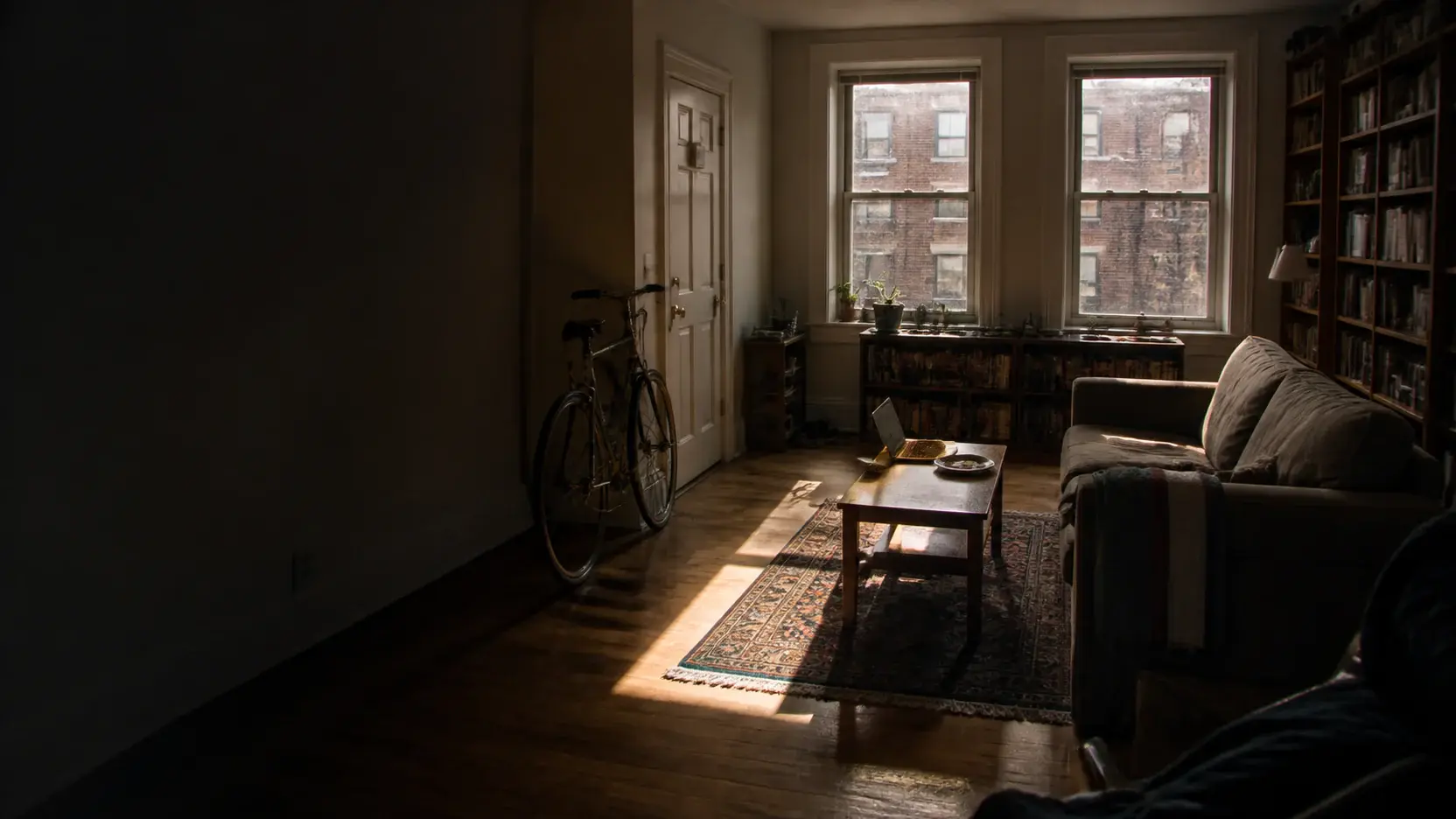
Your landlord insures the building, not your life in it.
Renters insurance protects your belongings and personal liability. We make sure the policy fits what you own and how you live.
What this covers
Four coverages, and only one of them is about your things.
Most renters think of this as belongings insurance. The liability piece is arguably the more valuable half.
Personal property
Furniture, electronics, clothing, kitchen equipment, a bicycle. People consistently underestimate the replacement cost of a full apartment until they add it up room by room. Ask for replacement cost rather than actual cash value; the price difference is small and the claim difference is not.
Personal liability
If a guest is injured in your unit, or if you cause damage that reaches a neighbor's apartment, this is what responds. An overflowing tub on the fourth floor can damage three units below it, and the resulting claim can run well past a year's rent.
Loss of use
If a fire or a burst pipe makes the unit uninhabitable, this pays the difference between your rent and what temporary housing actually costs. In tight rental markets that gap can be substantial.
Coverage that travels
Personal property coverage generally follows you — a laptop stolen from a car, luggage lost on a trip, belongings in a storage unit, a student's things in a dorm. Limits away from the residence are often reduced, which is worth knowing before you rely on it.
Typically included
What a renters policy should include.
The whole thing usually costs less per month than a streaming subscription.
Replacement cost on contentsLiability at $300,000 or moreLoss of useMedical payments to othersWater backup where availableScheduled coverage for a ring or instrumentCoverage while travelingUmbrella-eligible liability limitNot sure? Ask us
Where policies fall short
Where renters get caught.
The assumptions that cost people money.
01
Assuming the landlord's policy covers your belongings
It does not, and it never has. The landlord's policy insures the structure and the landlord's liability. Your possessions and your liability are simply uninsured unless you buy a policy.
02
Contents written at actual cash value
Depreciated payouts on a four-year-old laptop and a five-year-old mattress add up quickly. Replacement cost is usually a very small premium difference.
03
Liability set at the minimum the landlord required
Many leases require a modest liability limit, and renters buy exactly that. Raising it is inexpensive, and it is the coverage most likely to face a large number.
04
Roommates assuming one policy covers everyone
It generally does not. Coverage typically extends to relatives and the named insured, not to an unrelated roommate. Each renter usually needs their own policy.
Common questions
What renters ask us.
Short answers to the questions we hear most.
How much does renters insurance cost?
For most renters it is a small monthly amount, and bundling it with auto frequently produces a multi-policy discount on the auto side that offsets a meaningful part of the cost. It is one of the few places in insurance where the math is genuinely easy.
How much personal property coverage do I need?
Walk through each room and estimate what it would cost to replace the contents new. Most people land far higher than their first guess. It is better to be slightly over than to discover the limit mid-claim.
Is my roommate covered under my policy?
Almost never. Coverage extends to you and generally to relatives living with you. An unrelated roommate needs their own policy — which also keeps a claim from becoming an argument about whose belongings were whose.
Does it cover my things if my car is broken into?
Yes, typically. Personal property stolen from your vehicle is generally covered by renters insurance rather than auto insurance, subject to your deductible. Auto covers the car; renters covers what was inside it.
Does it cover water damage?
Sudden and accidental water damage is usually covered. Flood is not, and it is a separate policy. Sewer or drain backup often needs an endorsement. In a basement or garden unit those distinctions matter more than usual.
Our review
What we look at on a renters policy.
Personal property limit against a real room-by-room estimate
Replacement cost versus actual cash value
Liability limit and whether an umbrella can sit on it
Loss of use limits
Sub-limits on jewelry, electronics, and bicycles
Coverage for belongings away from the unit
Water backup availability
Bundling opportunities with auto
The cheapest policy you will ever be glad you had.
Tell us what you are protecting and we will price it across the carriers we represent.