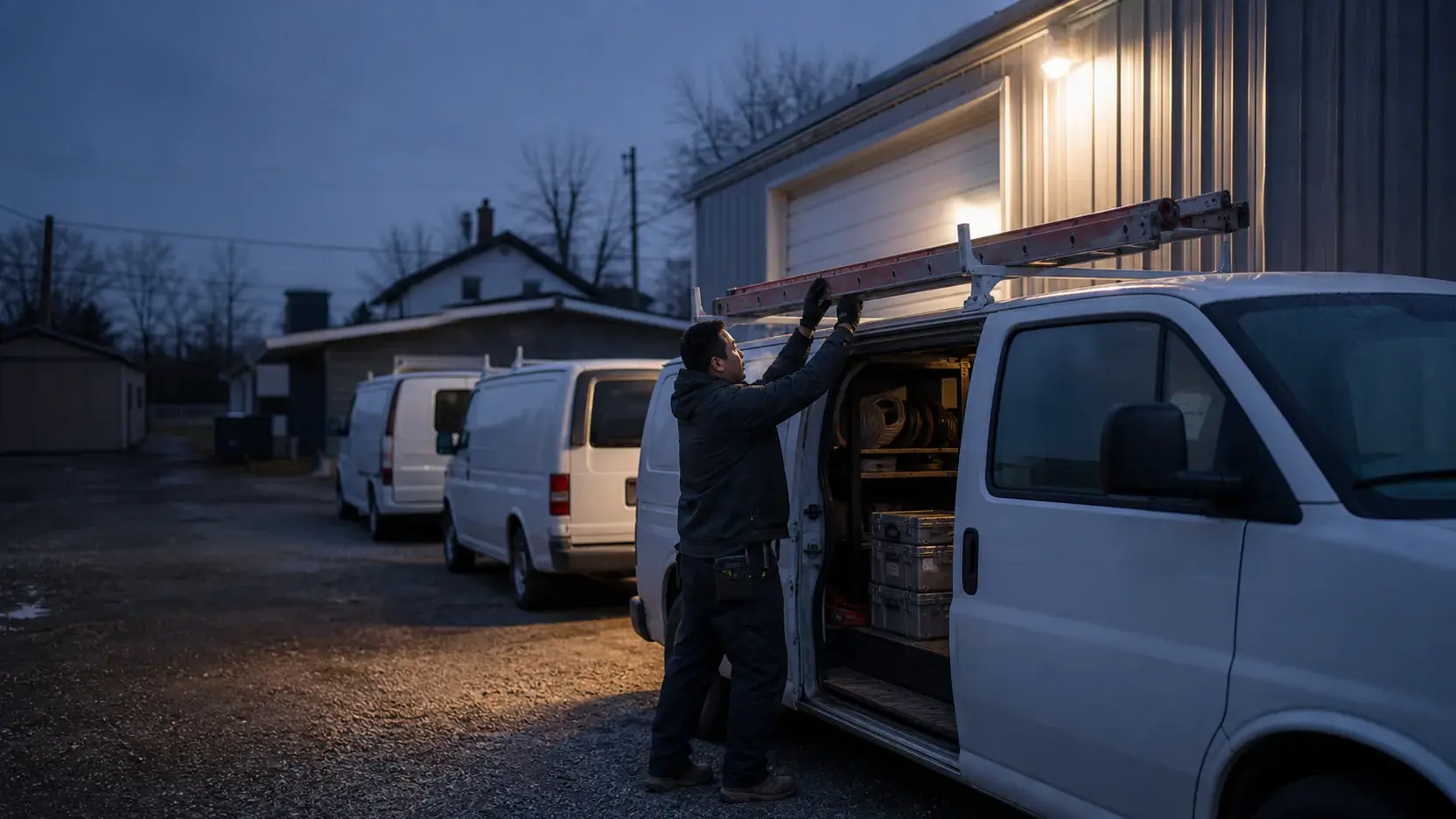
The moment a vehicle works for the business, the rules change.
One work truck, van, or employee-driven car can create a business exposure. We cover the vehicles, drivers, and uses a personal policy may exclude.
What this covers
The four ways a business touches a vehicle.
Commercial auto is built around who owns the vehicle and who is driving it. Most gaps live in the categories a company does not realize apply to it.
Owned vehicles
Trucks, vans, and cars titled to the business. Liability, physical damage, and — depending on the work — coverage for permanently attached equipment. Vehicle weight, radius of operation, and cargo all affect how the policy is rated and which carriers will write it.
Hired & non-owned auto
The coverage that responds when an employee drives their own car for work, or when the company rents a vehicle. Their personal policy pays first, and when it runs out the injured party looks at the business. This is the most commonly missing coverage on small-business programs, and it is usually inexpensive to add.
Drivers and their records
Carriers underwrite the driver list, not just the vehicle list. Motor vehicle records, a written driving policy, and a process for adding and removing drivers all affect eligibility, pricing, and whether a claim is contested. Personal use of a company vehicle needs to be addressed explicitly.
What sits above it
Commercial auto liability is one of the primary layers a commercial umbrella attaches to. If the underlying limit is thin, the umbrella attaches higher than you expect and the gap belongs to the business. Auto is frequently the largest single liability exposure a small company has.
Typically included
What a commercial auto program usually needs.
The specifics depend on the work, but these questions come up every time.
Liability sized for a serious injury claimHired and non-owned autoPhysical damage on owned unitsUninsured and underinsured motoristMedical paymentsAttached equipment coverageRental reimbursement for downtimeA written driver-eligibility policyUmbrella-compatible underlying limitsNot sure? Ask us
Where policies fall short
The commercial auto gaps we find most.
Almost all of them trace back to a vehicle nobody thought of as a business vehicle.
01
Business use on a personal policy
An owner using a personal truck for jobs, or a contractor carrying tools and materials, on a policy that excludes business use. The exclusion is discovered at the claim, not at the renewal.
02
No hired and non-owned coverage
Any company whose employees run errands, make deliveries, or drive to client sites in their own cars has this exposure. The absence of a company-owned vehicle does not remove the company's liability.
03
Drivers never added to the policy
A new hire begins driving before anyone tells the agent. Carriers vary in how they treat an unlisted driver, and none of the outcomes are good.
04
Thin liability limits under an umbrella
An auto accident is the most likely route to a very large claim for many small businesses. Underlying limits set years ago frequently no longer support the umbrella sitting above them.
Common questions
Commercial auto questions.
The ones that decide whether a company is actually covered.
My employees use their own cars. Do I need commercial auto?
You need hired and non-owned auto liability, which is the part of commercial auto that addresses exactly this. Their personal insurance is primary, but a serious injury claim will reach past it to the business that directed the trip. It is one of the least expensive coverages relative to the exposure it removes.
Can I just add the business to my personal auto policy?
Generally no. Personal auto policies exclude business use, and adding a business name as an additional insured does not convert a personal policy into a commercial one. Once a vehicle is titled to the business or used regularly for it, the exposure belongs on a commercial policy.
Does commercial auto cover the tools in my van?
Usually not on its own. Permanently attached equipment can be covered by the auto policy, but loose tools and materials generally belong on an inland marine or contractors equipment policy. This split surprises contractors regularly.
How do driver records affect my premium?
Significantly, and sometimes they affect eligibility rather than just price. Carriers pull motor vehicle records at binding and often at renewal. Having a written driver-eligibility standard and checking records before someone drives is one of the few things a small business can do that measurably improves its insurance terms.
Our review
What we review for commercial auto.
Every vehicle, its title, and its actual use
Whether employees drive personal vehicles for work
Hired and non-owned auto coverage
The full driver list and current motor vehicle records
Radius of operation and any interstate travel
Attached equipment and tools carried
Underlying limits against the commercial umbrella
Personal use of company vehicles
One vehicle is enough to need this conversation.
Tell us who drives and what they drive, and we will tell you where the exposure sits.